On 28 September I was invited to Vilnius "Laisvė" Gymnasium for a "Science Knowledge Day" (Mokslo žinių diena), where I gave the students a lecture called "Ideal Geometry in Space". The event was organised by "Mokslininkų rūmai" (House of Scientists), a division of the Lithuanian Academy of Sciences; the aim of this series is to introduce young people to the profession of a scientist and help them discover the fields of science that interest them.
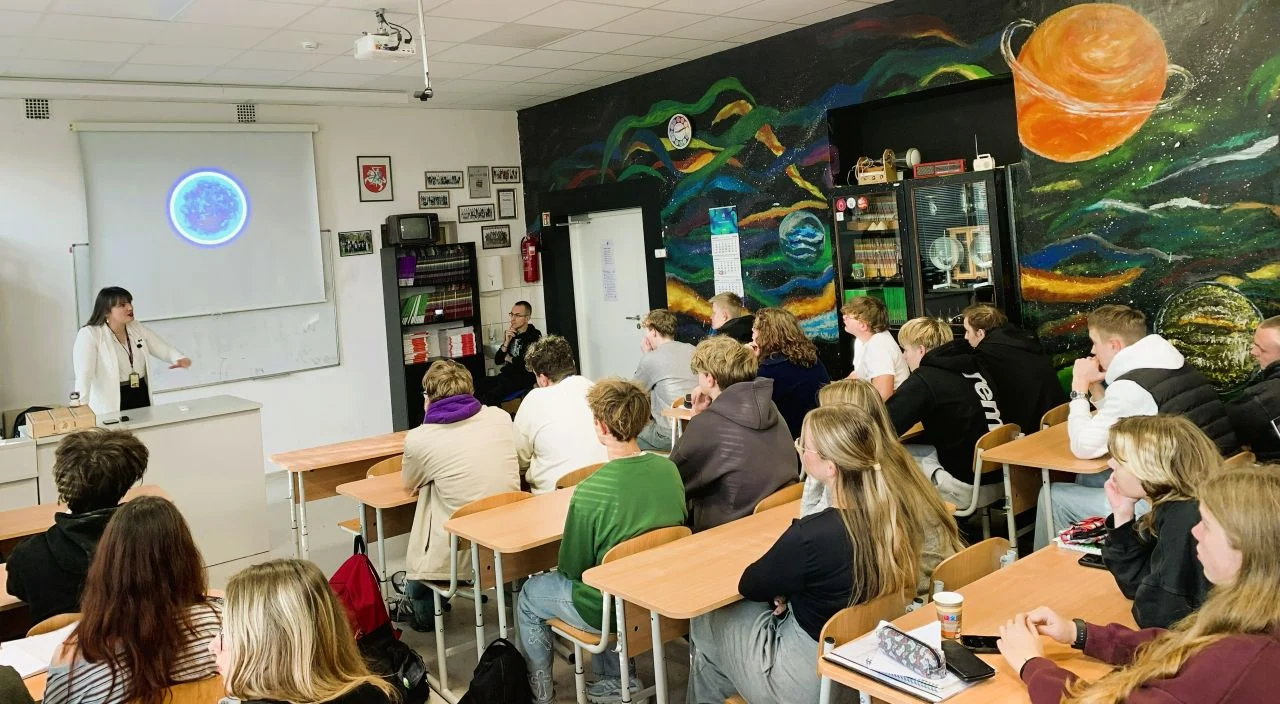
Why are some bodies round and others not?
The Sun, the Moon, Earth and Jupiter are almost perfectly spherical, while asteroids, comet nuclei and Mars's moon Phobos are completely irregular. In the lecture we worked out what causes this difference.
At small scales surface tension wins – which is why soap bubbles and droplets pull themselves into spheres, the shape with the smallest surface area. Small celestial bodies are held together by chemical bonds and other electromagnetic interactions, and the strength of the material keeps gravity from "rounding them off". Only once a body is massive enough does its own gravity, pulling equally in all directions, overcome the strength of the material – the body reaches hydrostatic equilibrium and becomes a sphere. This threshold is called the "potato radius" and, depending on composition, is roughly 200–300 km.
Hydrostatic equilibrium is also part of the International Astronomical Union's 2006 definition of a planet – it is exactly why Ceres became a dwarf planet. And of more than 400 known moons in the Solar System, only about twenty are round. So in space a sphere is not the rule, but a privilege of the largest bodies.
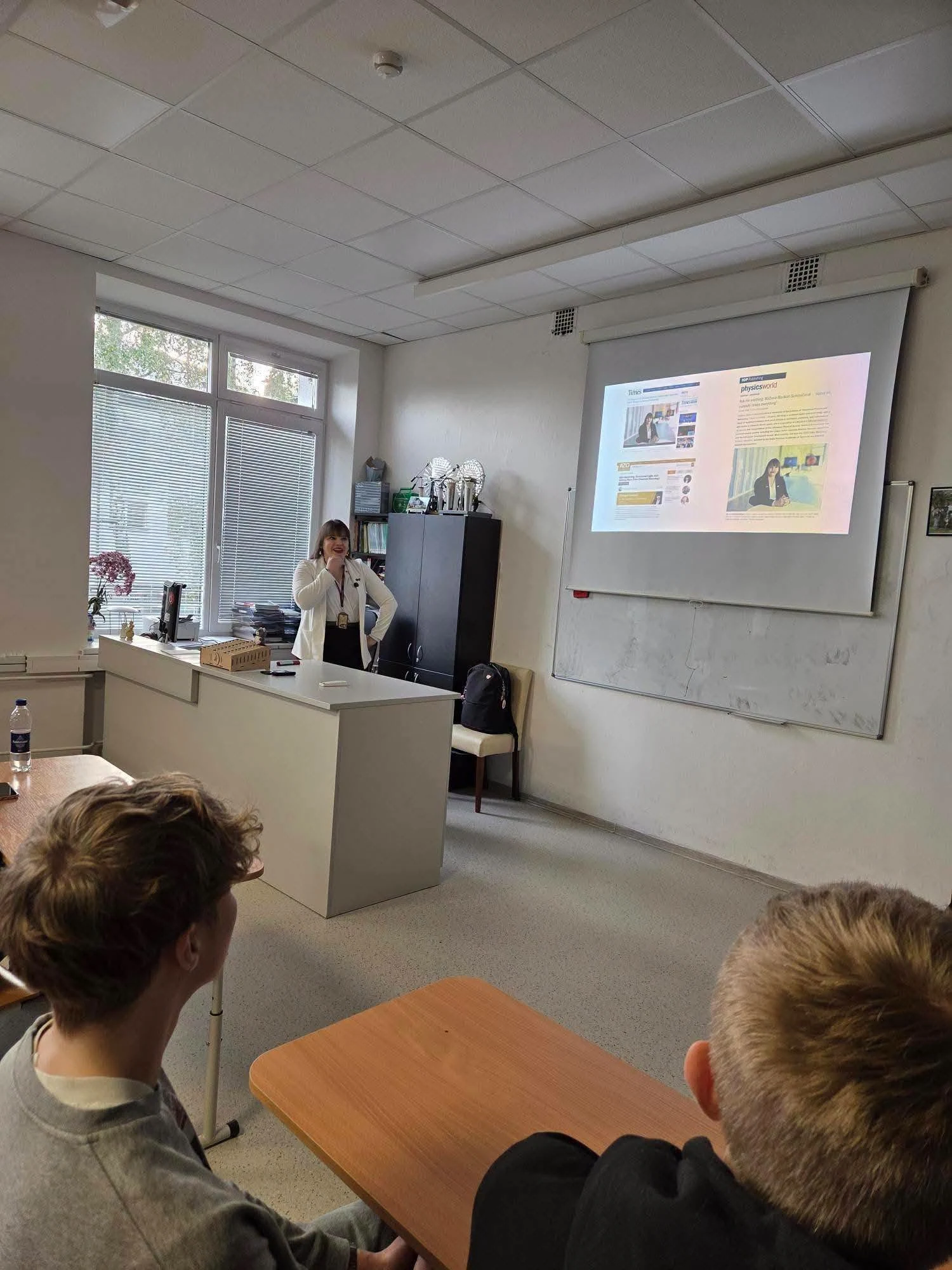
Spinning flattens
The third factor is rotation. Spinning bodies flatten at the poles: Earth's equatorial radius is about 21 km larger than its polar radius. That is why the point farthest from Earth's centre is not Everest but Chimborazo in Ecuador, and why GPS and other satellite navigation systems model Earth as a flattened ellipsoid (WGS 84). Fast-spinning Saturn is flattened by almost 10%, and the dwarf planet Haumea, which turns once in about four hours, is stretched out like a rugby ball.
The roundest object in the Universe
The climax of the lecture was the star KIC 11145123, the roundest natural object ever measured. Its radius is about 1.5 million km, yet its equatorial and polar radii differ by only about 3 km. This was measured not directly but with asteroseismology – by studying the frequencies of oscillations travelling inside the star.
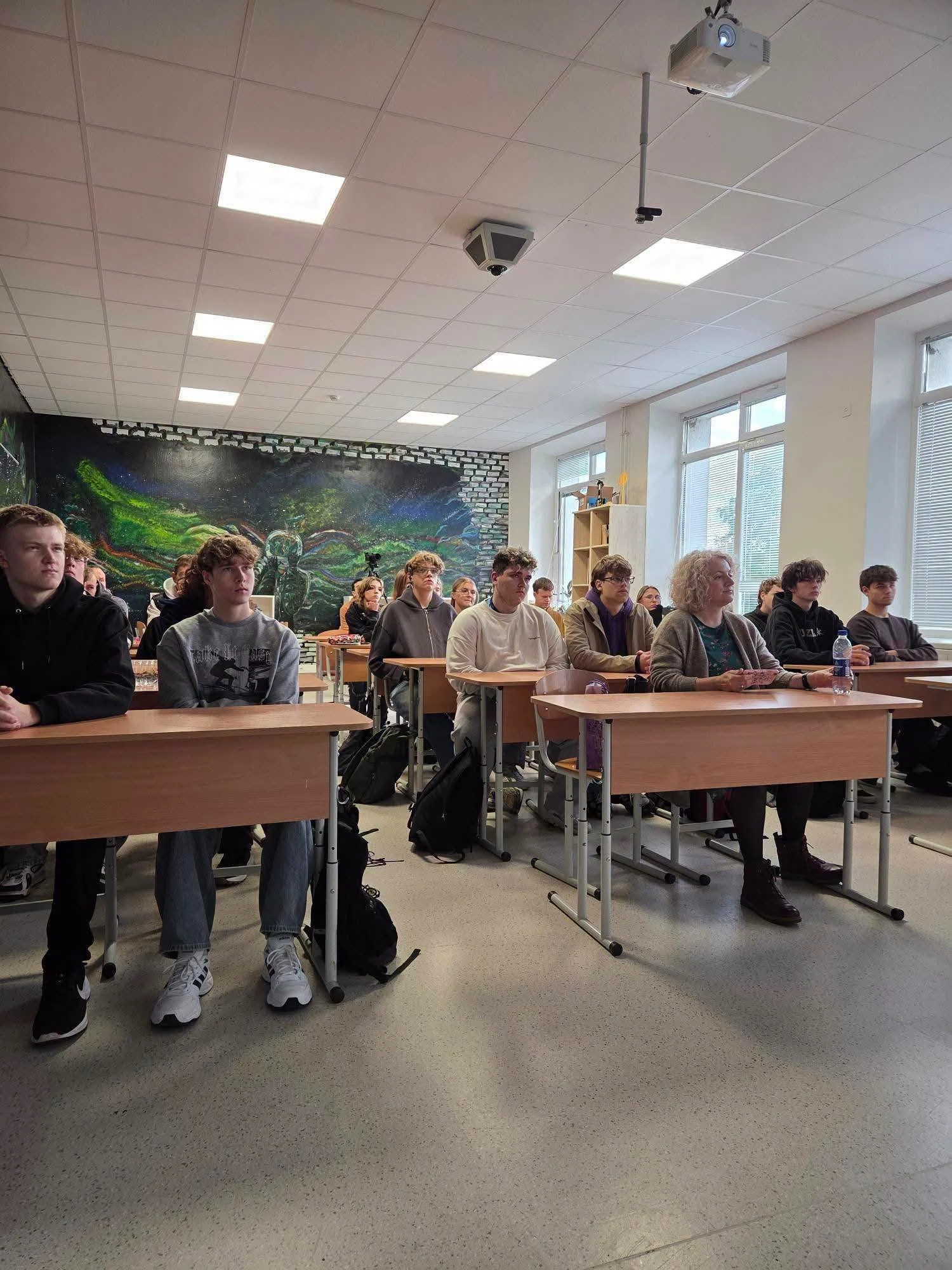
The main idea I wanted to get across: the shape of a celestial body is a trace of its physical history. If a body is not a sphere, it is most likely too small for hydrostatic equilibrium or spins too fast. So just by looking at its shape we can already say a lot about its properties.
Thank you
During the lecture I asked the students lots of questions and invited them to solve tasks, and I had prepared prizes for the most active ones. The lecture was filmed and photographed by members of the school's Film Club.
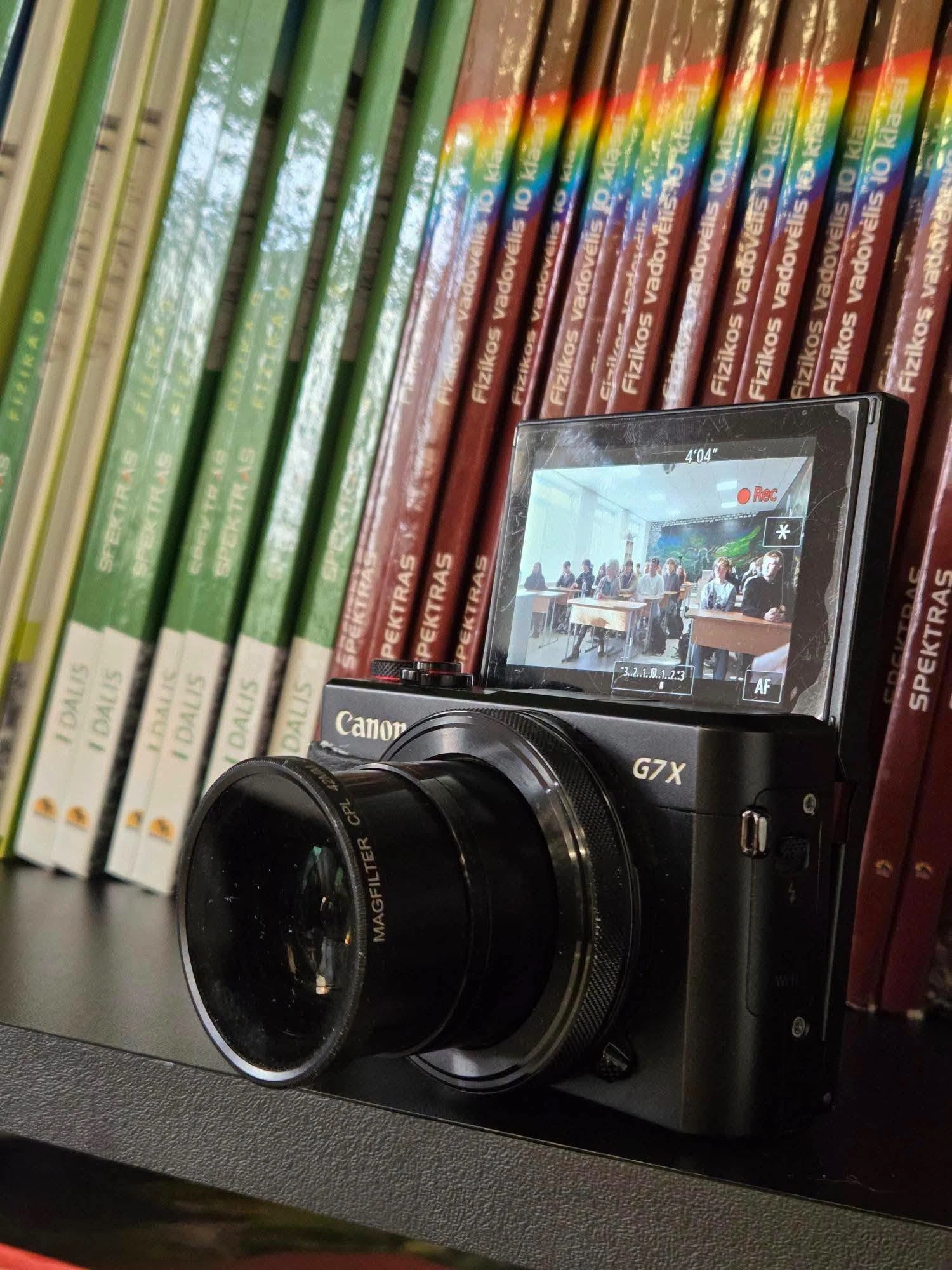
Thank you to the headteacher of Vilnius "Laisvė" Gymnasium, physics teacher Jolanta Gutauskaitė-Janulevičienė, to Liliana Feiginaitė, chief specialist at "Mokslininkų rūmai", and, of course, to the curious students!