On 9–10 September the University of Jyväskylä in Finland hosted Finnish Quantum Days 2026. For two days, quantum technology researchers, developers, industry and education representatives from Finland and other countries discussed the latest research, applications of the technology and how to train the next generation of specialists.
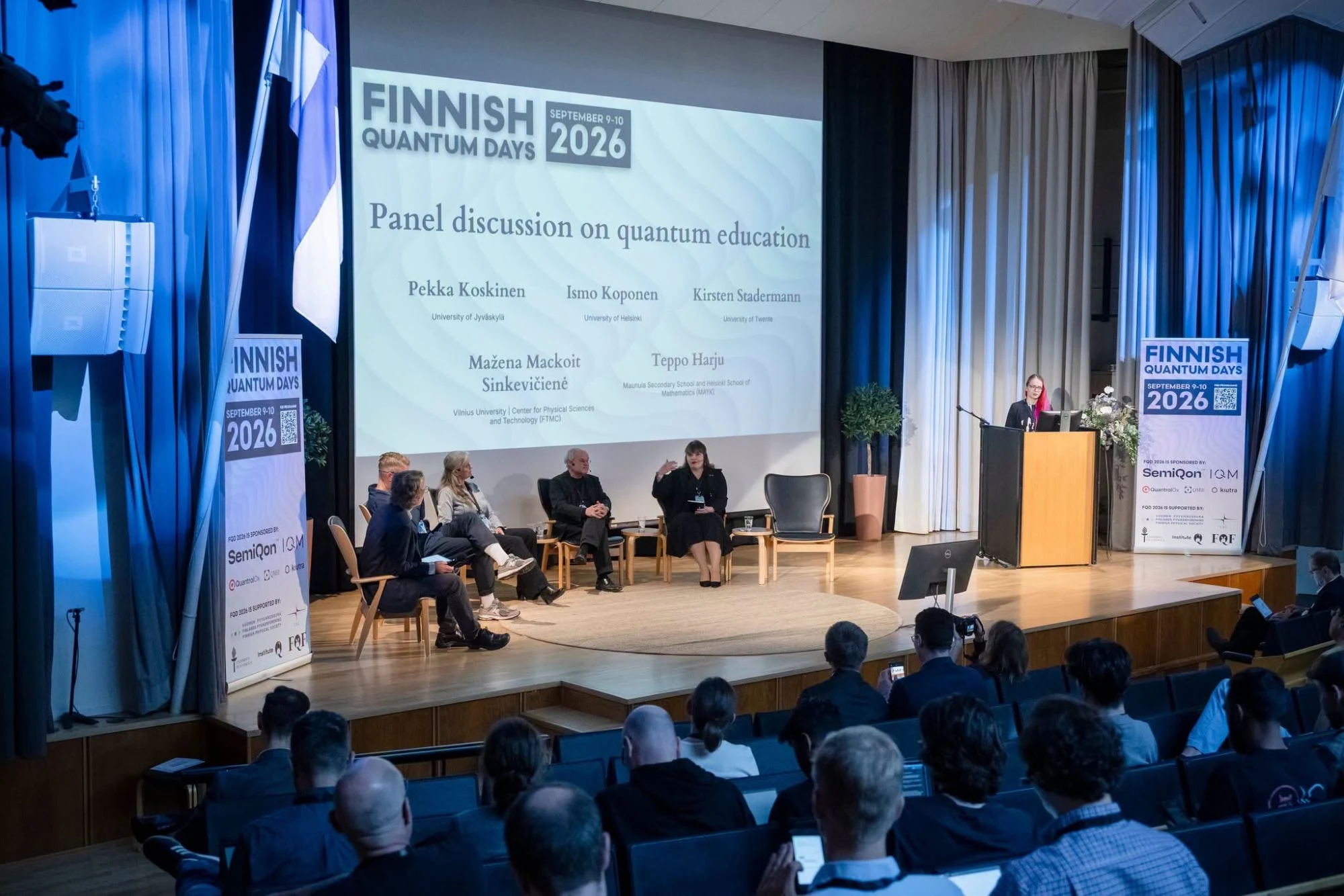 Panel discussion on quantum education. Photo: Pasi Hakala / Studio Varjo
Quantum physics at school
I was invited as a speaker to a panel discussion on quantum education. Together with representatives of universities and schools from Finland and the Netherlands – Ismo Koponen, Kirsten Stadermann, Teppo Harju and Teiko Heinosaari – we discussed how to bring modern quantum physics into schools, how to get students interested and what support teachers need.
Teaching quantum physics matters both for training future specialists in the field and for helping the wider public understand what the promises of new technologies are based on.
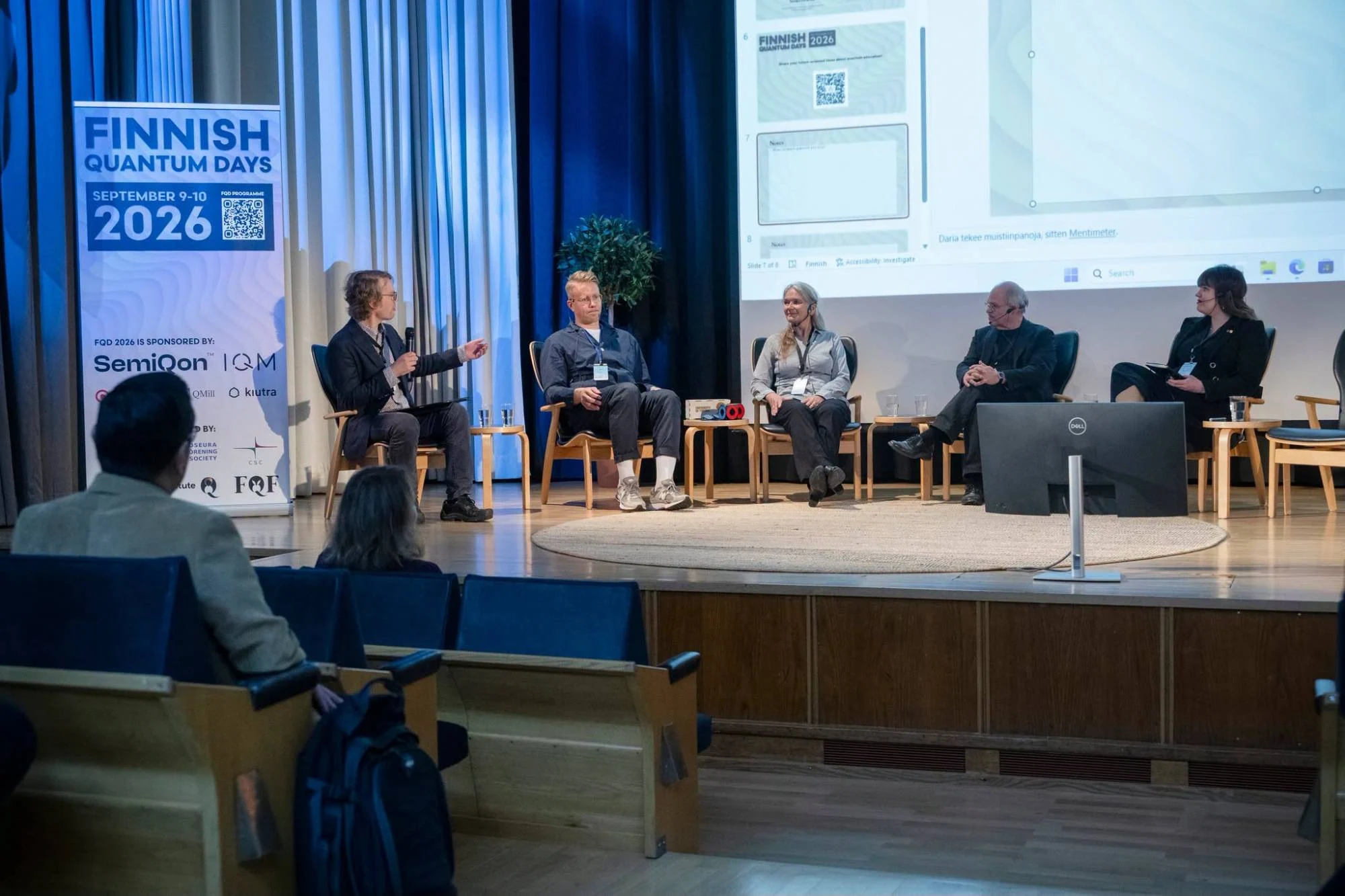 Photo: Pasi Hakala / Studio Varjo
In the discussion I stressed that in Lithuania quantum physics is not yet part of the school curriculum, but students already learn about the structure of the atom as a probabilistic electron cloud; the double-slit experiment is discussed too, and my episodes on the IQM quantum computer and an introduction to quantum physics are shown in class. The challenge is not only to include more topics, but also to connect them with the technologies being developed today. Quantum physics feels closer to a student who learns that Lithuanian lasers are used in quantum computers – even in the first quantum computer operating in space.
What teachers need most are ready-made, reliable tools available in Lithuanian that can be used in class straight away: short videos, examples and explanations that show how science is connected to real technologies. I am glad that episodes of my YouTube channel "Trumpos fizikos paskaitos" (Short Physics Lectures) are already shown in lessons, are linked in the new 8th-grade physics textbook and are used to prepare for olympiads.
The experience of our Finnish and Dutch colleagues showed that things work best where teaching quantum technologies is tied to a national strategy and to teacher training.
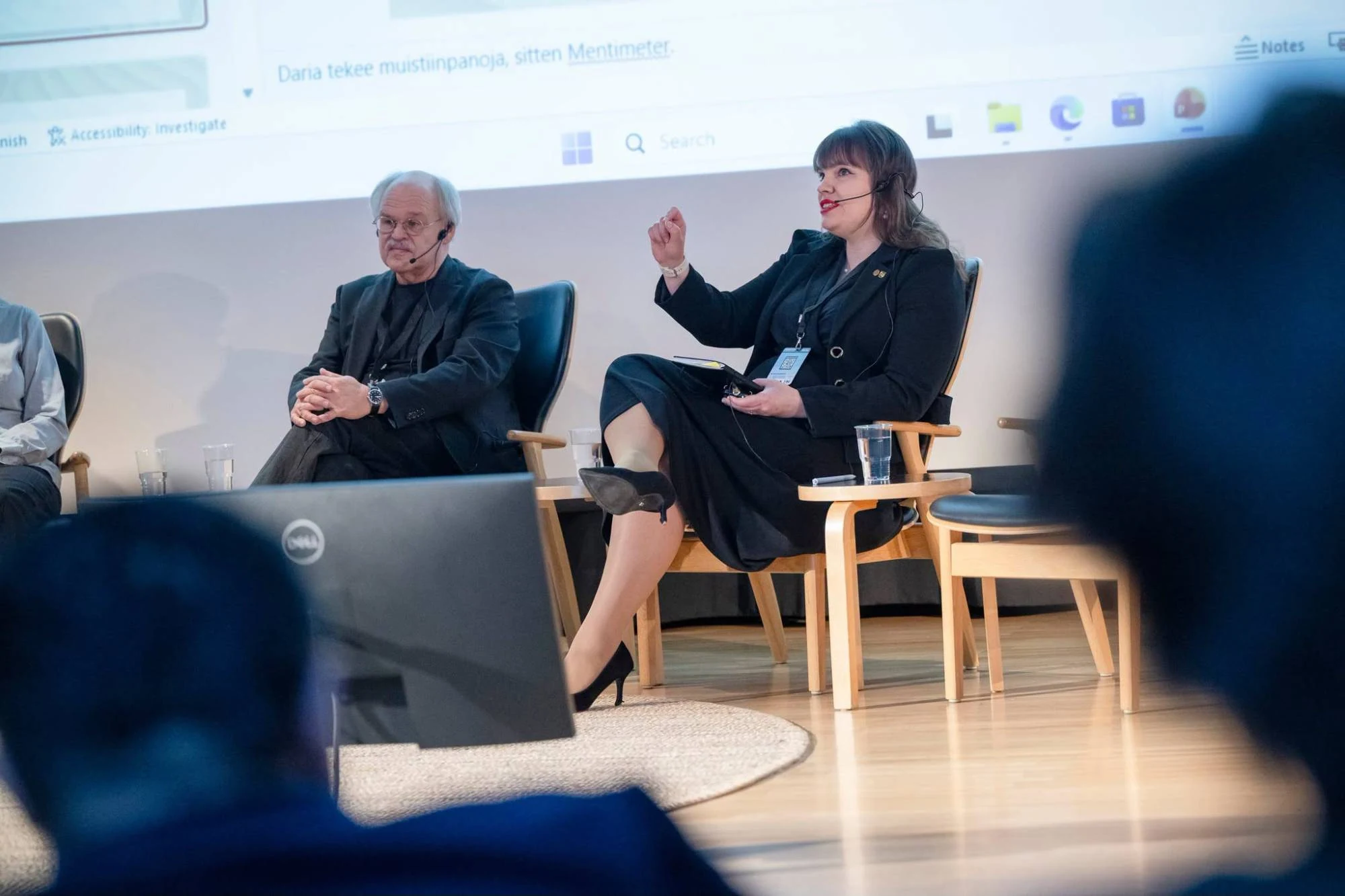 Photo: Pasi Hakala / Studio Varjo
On the 3MT jury
I also had the honour of serving on the jury of the 3MT Competition Final. Together with Prof. Aline Ramires (TU Wien) and Dr Jorden Senior (VTT Technical Research Centre of Finland) we judged how well young researchers could present complex scientific ideas clearly, convincingly and understandably to a broad audience.
The Lithuanian delegation and meeting a Nobel laureate
We travelled to the conference as a Lithuanian delegation: with me were Mantas Skaržinskas, innovation manager at FTMC, and Žymantas Mozūraitis, Third Secretary at the Embassy of Lithuania in Finland.
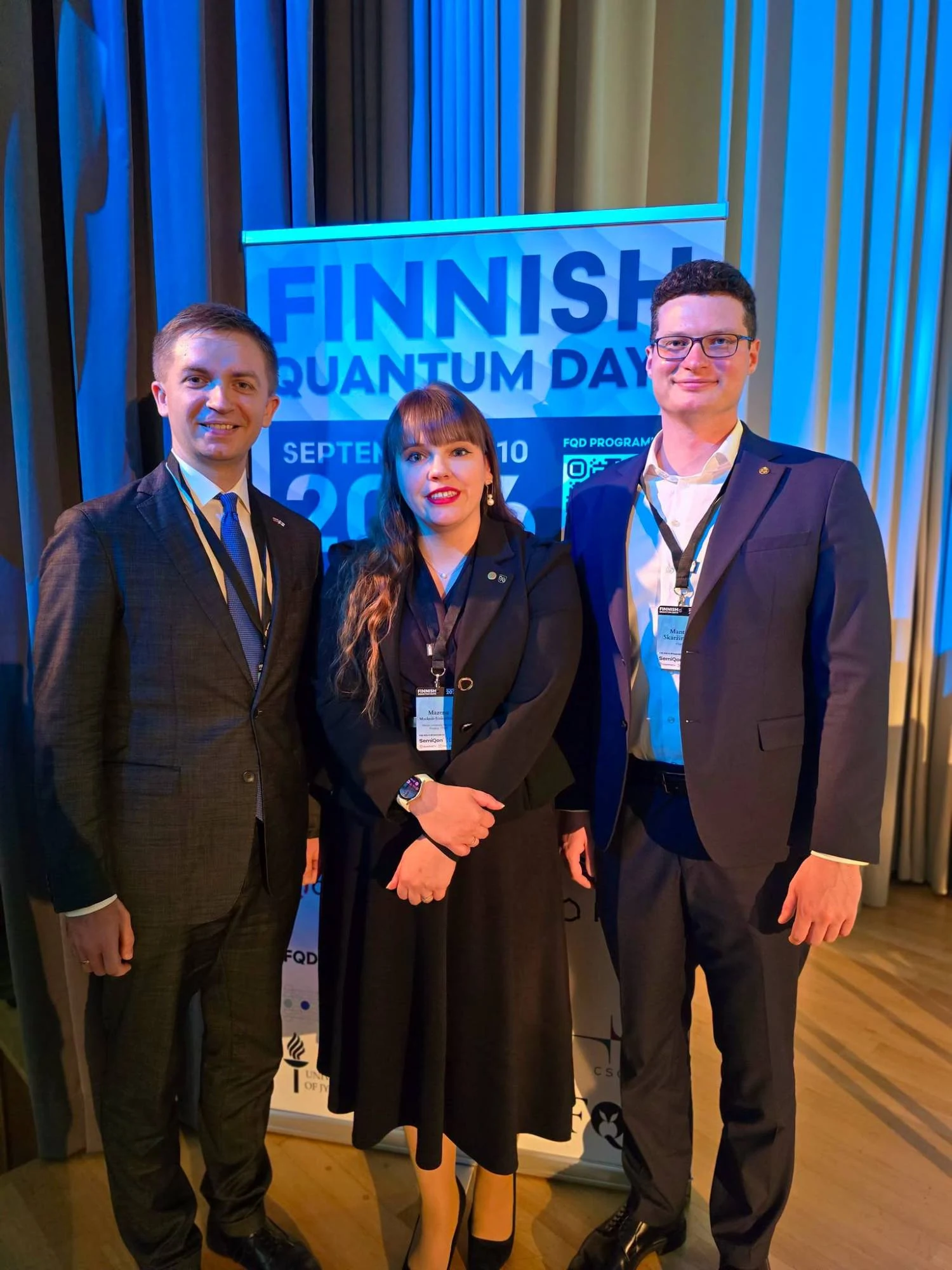 From left: Žymantas Mozūraitis, Mažena Mackoit-Sinkevičienė and Mantas Skaržinskas. Personal archive
One of the highlights of the conference for me was attending the lecture of, and briefly talking with, the 2025 Nobel Prize in Physics laureate Prof. John M. Martinis (University of California). He spoke about the fundamental quantum phenomena and experimental methods on which today's superconducting quantum computers are built.
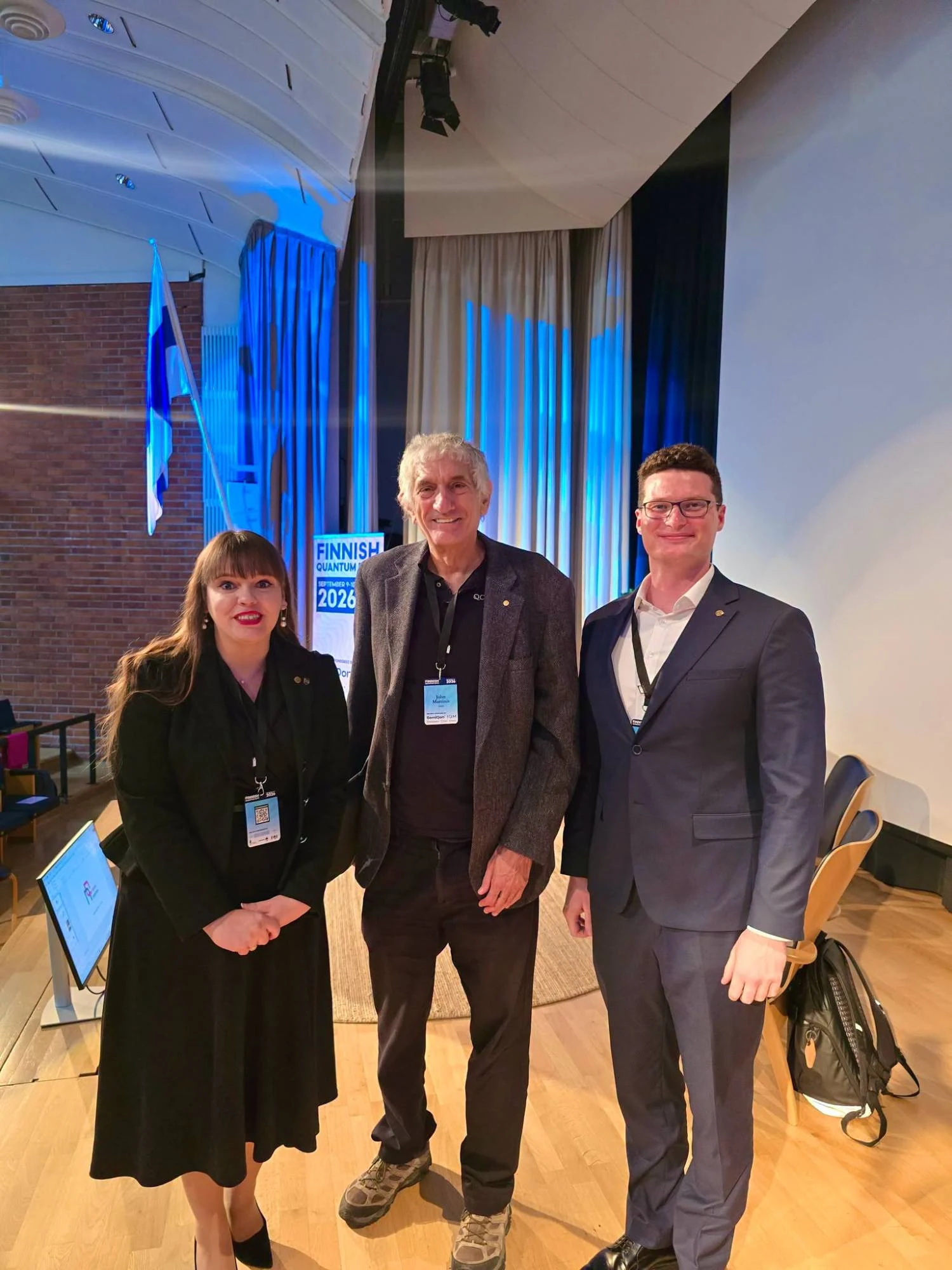 From left: Mažena Mackoit-Sinkevičienė, Prof. John M. Martinis and Mantas Skaržinskas. Personal archive
Other talks covered new quantum computer components, electronics working at extremely low temperatures, quantum measurements and connecting quantum processors with supercomputers. Mantas Skaržinskas noted that Finland is a good example for Lithuania: to take part in international quantum technology projects, a country does not need to build the whole value chain – it can contribute what it does best, such as materials, components, measurement methods or software.
Thank you
My sincere thanks to the whole Finnish Quantum Days 2026 and InstituteQ organising team for the invitation, a wonderfully organised event, a warm welcome and the chance to take part in discussions that matter not only to Finland but to the entire European quantum technology ecosystem. Special thanks to Riku Tuovinen and Daria Anttila from the University of Jyväskylä for their care and attention to both speakers and participants.
I hope that meetings like this will bring Lithuania and Finland even closer together in quantum technologies, science and education.
We plan to return to Finland in 2027!